
Initial fertility tests tend to be undertaken by your GP and are mainly blood tests.
If you have been struggling to conceive, the following tests can be undertaken by your GP to rule out any immediate issues – this will rule out anything which can be treated by your GP.
- Male semen analysis – it’s always assumed that it is the woman who has the problem. You’d be surprised to learn how many couples have issues because of male factors and it is therefore very important to get this checked before you undergo any invasive investigative tests and procedures.
- Day 21 Progesterone – this checks your progesterone level to confirm that ovulation has occurred and needs to be done after ovulation has taken place – ideally 7 days after ovulation to be most accurate. Levels of approximately 10-20 ng/mL are generally felt to indicate ovulation has taken place.
- AMH (Anti-Müllerian hormone) – this can be done at any point in your cycle as levels do not change. It gives an idea of your ovarian reserve and how many eggs you have in your ovaries. AMH naturally decreases with age as the ovarian reserve is depleted, and women in their 40s typically have lower AMH results. AMH levels are considered ‘satisfactory’ if they are above 21.98 pmol/l.
- TSH (Thyroid Stimulating Hormone) – there is a growing body of evidence to suggest that elevated TSH levels have a negative impact on fertility and the optimum level for a woman is between 1 and 2 mIU/L. The NHS considers a normal range of up to 4.20mIU/L so you may need to educate your GP in this regard, should your levels come back between 2-4mIU/L.
- Prolactin – elevated prolactin levels can indicate fertility problems, as it may interfere with period regularity. A normal level for women is less than 500 mIU/L.
- Vitamin D – this is a very important vitamin for fertility and low levels can impact your ability to become pregnant. Recent research shows women who have sufficient vitamin D intake are more likely to become pregnant (and produce high quality embryos if undergoing IVF) than those who are deficient.
This is not an exhaustive list but is a good starting point. Details of other tests are included in my progammes and IVF e-guide.
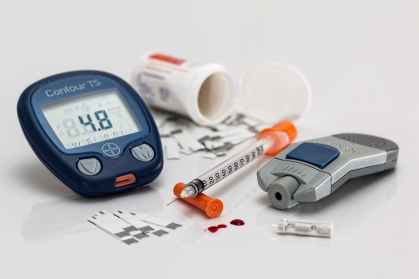
Some GPs may refuse to perform all of the tests you feel that you need in order to fully understand any underlying issues that might be impacting your fertility. If this is the case then I would recommend using one of the very good at home finger prick test kits you can now buy online from companies like Thriva and Medichecks.
Both often have discounts available for their tests and this is a great way to empower yourself with knowledge about your personal circumstances and what is or is not impacting your fertility.
 The Happy Uterus